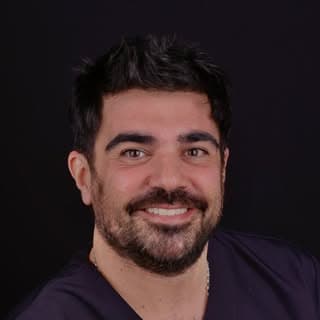
Hello, I am Daniel Robles, dentist, 44 years old, and I reckon I have been on a diet for 45 of them. I cannot remember the first time I put myself on one, but I have a friend who says I am thin in odd-numbered years and out of shape in even ones. Maybe that is why my Instagram algorithm no longer puts football, cars or women in bikinis under my nose (well, that one it still does), and instead, for a good while now, I cannot stop seeing the importance of supplementation, habits, the microbiota, sucking on a rock of salt, hugging trees and walking barefoot in the whole-body health of the patient, and the importance of integrative medicine.
What I have prescribed since 2001
- Antibiotic
- Chlorhexidine
- Anti-inflammatory
What I am going to prescribe
- The usual, when it is called for
- Enough protein, not just a soft texture
- Early mobilisation, not absolute rest
- Real sleep and daylight
A year ago I started my umpteenth diet, because I was in an even-numbered year, and I found a nutritionist who pulled off something the others never managed: adherence to a habit, and in my case to two, dietary and nutritional, plus building sport and physical exercise into my day as something fundamental. Oddly enough it has not been the diet on which I lost weight fastest, nor even the one on which I have lost the most weight in the year and a bit I have been at it, but it is the diet on which I have felt best overall. My sense is that I am healthier, I rest better, my blood work says I am improving levels that had been off for many years, and all of this got me thinking: is it true that nutrition and other habits matter this much?
And to top it all off, my friend Antonio is dead set on convincing me about vitamin D deficiency and the importance of supplementation in bone metabolism, which is fundamental at my age, and although I am olive-skinned and live in a sunny country like Spain, Antonio is right: I had two tests done and I am well below the normal range.
Anyway, since I was not sleeping well either, one night I started thinking and decided it was time to read literature from orthopedics, trauma and other specialties, looking for links with dentistry, and my surprise was enormous. Studies associate low vitamin D with lower ISQ values, although part of that difference was already present on the day of implant placement, while studies of early implant failure remain uncertain. Outside dentistry, hospital and surgical nutrition guidelines propose protein targets for older or unwell populations, some observational studies associate early mobilization with better outcomes after other operations, and growth hormone is released in pulses linked to deep sleep. None of these sources compares rest with light activity after oral surgery.
A lot of very interesting information, with scientific backing that is a long way from the shamanic air this sort of claim usually carries among professionals in our sector.
The two components of stability, week by week (teaching model)
But since I do not want to give you a dissertation on bone biology and physiology, but rather to plant in you the same itch I planted in myself, I am going to give you a couple of examples that will make you understand what I mean.
01The substrate
I was the one leaving my patients in protein deficit
When we treat a patient in the clinic who is going to have a surgical procedure, whatever it may be, the procedure carries with it a process of healing, repair and regeneration of the operated tissues, and my recommendations were always the same: rest for 3 to 5 days, a soft cold diet (this is a very Spanish thing, but here that means gazpacho, yogurt, ice cream, cold soup) and carry on with the medication and the usual instructions about not rinsing, and so on. And off I went, pleased as punch, thinking that if one of these treatments ran into trouble it could only be because of habits affecting the site locally, such as tobacco or alcohol, or because of my own poor choice of technique or materials, or at most because of some underlying condition of the patient such as diabetes, without asking whether that illustrative recommendation met each patient's nutritional needs.
Easier still: have a look at this chart.
Protein per day: modeled estimate from USDA food composition data, not measured in patients
| Food | Assumed serving | Protein |
|---|---|---|
| Gazpacho | 250 mL | 2.0 g |
| Whole plain yogurt | 125 g | 4.3 g |
| Vegetable purée | 250 g | 3.5 g |
| Water | - | 0.0 g |
| Vanilla ice cream | 60 g | 2.1 g |
| Total, one serving of each | 11.9 g |
Here you can see an illustrative model of one day on that diet, compared with a protein range borrowed from guidelines for hospitalized, older or major-surgery patients. The selected foods do not represent every soft diet and this comparison does not prove protein deficiency, impaired healing or treatment failure after oral surgery. The image of standing on the nutrient hose frames a question, not a demonstrated mechanism: if a patient eats little or repeats only a few foods, is their protein intake adequate? Protein deficiency can impair collagen synthesis and capillary formation, but it does not follow that extra protein speeds healing in someone already eating enough, and no oral-surgery outcome trial validates this comparison.
If we also add the ice cream we have always been told is good because of the local cold, it is worth remembering that there is no clinical evidence that the sugar in an ice cream impairs oral healing in non-diabetic patients. The more cautious concern is displacement: within an already limited intake, it may replace foods that provide more protein and micronutrients.
02The mineral
I am olive-skinned, I live in Spain, and I am well below normal
Vitamin D, which many more of us are short of than we would think in a country like this one (back in 2007, Holick's review in the New England Journal of Medicine already estimated one billion people worldwide with deficiency or insufficiency), plays a fundamental role in the intestinal absorption of calcium, which is the basic building block of bone, and it regulates osteoblastic and osteoclastic activity. Without enough vitamin D, that absorption decreases right when new bone needs mineralising. Screening for and correcting a documented deficiency under professional supervision is reasonable general patient care, but no trial has shown that supplementation lowers implant failure rates.
- 13 %
- of the European population below 12 ng/mL, the deficiency threshold
- 40 %
- below 20 ng/mL, which is the adequacy target
- 143
- implants in the prospective study that measured ISQ by vitamin D status
European general-population figures, pooling all ages. They replace the draft's original 90% figure, which we could not source.
From sunlight to bone, and where the route narrows
The two vitamin D numbers cannot be mixed up
What you take
units: IU or micrograms per day
- EFSA adequate intake, adults
- 15 µg = 600 IU
- IOM RDA, 1 to 70 years
- 600 IU
- IOM RDA, 71 years and over
- 800 IU
- IOM tolerable upper intake level
- 4,000 IU
What the blood test reports
units: ng/mL (nmol/L)
- Deficiency
- < 12 ng/mL (30 nmol/L)
- EFSA and IOM target
- 20 ng/mL (50 nmol/L)
- Contested clinical preference
- 30 ng/mL (75 nmol/L)
- IOM concern threshold
- > 50 ng/mL (125 nmol/L)
Magnesium and zinc are related to mineralization, enzymatic activity and bone metabolism. Manganese has similar biological plausibility, but its support comes largely from animal and laboratory studies and does not show that supplementation improves clinical outcomes. Vitamin K is related to osteocalcin activity and to the organization of the mineral in bone that is being formed.
03The load
They had my mother-in-law up and walking 12 hours after her hip operation
On another front, reading the articles that talk about the advantages and the regeneration mechanisms that relative exercise awakens at a systemic level during the recovery of a patient who has had surgery, I was blown away by the results, and I began to understand why my mother-in-law, after her hip operation, was practically being told to get up and walk 12 hours later.
And I kept thinking of the doctoral thesis of my friend David Chávarri: an animal experiment with 40 implants in the tibiae of 10 rabbits over six weeks. Five rabbits ran on a treadmill, starting at 5 minutes a day and progressing to two 10-minute sessions in the final two weeks; the other five remained in cages. This was mechanical loading of the tibia, not a comparison of rest and activity after human oral surgery. The buttress arrangement was reported as a qualitative trend, the buttress theory.
What happened around those implants
In the cage
Trabeculae with no dominant orientation
Running
Bone bridges toward the implant
This animal study shows a response of tibial bone to mechanical loading, but it cannot support guidance on movement or exercise after human oral surgery. It offers a mechanistic hypothesis, not a postoperative prescription.
In humans, a meta-analysis of 28 randomized trials found that moderate- to high-impact exercise, with ground reaction forces at least those of running, produces small, site-specific improvements in bone density and structure, mostly in postmenopausal women (Ng et al., 2023). None of that speaks to oral surgery yet, but it points a direction.
So then, why tell a patient: now rest for a few days? Or are we simply afraid of answering the question "doctor, can I take sick leave?". And I will go further: do any of us ask about our patients' average activity in a day, so as to understand how sedentary or active they are? With everything we now know about the benefits of physical activity, why does the medical history only ask about the medication they take or their past history?
04The night
The last can of worms: sleep quality
And the last can of worms I would like to open in these lines of intrusive thoughts I am learning from is sleep, and I do not mean dreaming of an early retirement, though there is that too, but quality over quantity in the hours we sleep. What is more, I somehow think the general population is starting to give sleep monitoring some importance, or at least that is how it looks given the number of smart bands being sold.
Sleeping well coincides with growth hormone pulses linked to deep sleep. The nocturnal melatonin peak appears to fall with age, but studies disagree on whether total 24-hour production changes. In laboratory and animal studies, melatonin has been related to mesenchymal-cell differentiation into osteoblasts and lower oxidative stress; that does not demonstrate a clinical benefit in human oral healing.
Throughout my degree and all the training I have had since, over more than 25 years, I have always heard that the mouth is part of a whole, but nobody ever really talks about that whole. For the first time, the general, integrative view of our patients brings us closer to the reality that our treatments have to be personalized and adapted not only to the pathological needs of the mouth, but to the circumstances. We are not aware of how habits, age, hormonal changes such as menopause, and lifestyle can alter our results.
05Monday's clinic
Two easy changes to start with tomorrow
And since we are starting somewhere, why not start with two easy changes? First, ask the patient: what does a day in your life look like? For example, if someone is on Ozempic, do you think their diet will cover the necessary minimums? In a patient who works a different shift every week, do you think they will sleep well?
And second, perhaps we should add this conversation about habits to our usual prescription, without replacing medication or clinical instructions when they are indicated.
Questions for the consultation
General-health discussion prompts, not a postoperative protocol or a replacement for indicated care.
- Sleep duration and quality
- Usual activity and procedure-specific instructions
- Vitamin D status when clinically indicated
- Night-time light exposure
- Daylight exposure
- Dietary magnesium
- Indicated analgesia
- Protein intake
- Ask what their day looks like
Frequently asked questions
How much protein does a patient need after oral surgery?
No guideline sets a specific protein target for oral surgery. Clinical nutrition guidelines place requirements at around 1.0 to 1.5 g per kilo of body weight per day, which for a 60 kg adult is about 60 to 90 g daily, but that band was written for hospitalized patients, people over 65 or patients under metabolic stress. It is a reference point taken from a sicker population, not a demonstrated requirement for an outpatient.
Does a soft cold diet leave the patient in protein deficit?
A modeled day of gazpacho, plain yogurt, vegetable purée, water and ice cream provides between 12 and 20 g of protein, against that reference band of 60 to 90 g. Swapping plain yogurt for Greek yogurt multiplies the protein in that food by 2.5. These are estimates based on USDA food composition data with assumed servings, not measurements in patients.
Does vitamin D deficiency make implants fail?
The association with early failure is plausible but not confirmed: the two largest series, of 1,625 and 1,740 implants, show a stepwise trend that does not reach statistical significance, and the significant results come from subgroups of 13 implants or fewer. The association with lower stability measured by ISQ is better supported, although a good part of that difference was already present on the day of placement.
What is the right blood level of vitamin D?
EFSA and the IOM place adequacy at 20 ng/mL, which is 50 nmol/L. The IOM flags values above 50 ng/mL, which is 125 nmol/L, as the threshold of possible harm. Confusing the two scales inflates the target two and a half times and lands it right on the concern threshold.
How much magnesium does a 60 kg patient need?
Magnesium is not calculated per kilo of body weight. The IOM reference intakes are 420 mg per day in men aged 31 and over and 320 mg in women. There is no surgery-specific magnesium requirement in any guideline.
Should the patient stay on absolute rest after oral surgery?
There is no published evidence on rest versus light activity after oral surgery specifically. What is well supported is early mobilization after major surgery, which the guidelines place on the day after the procedure. Extrapolating that to the mouth is still a reasonable hypothesis, not a demonstrated fact.
References
- Holick, M. F. (2007). Vitamin D deficiency. New England Journal of Medicine, 357(3), 266-281. PMID 17634462 DOI 10.1056/NEJMra070553
- Ng, C. A., Gandham, A., Mesinovic, J., Owen, P. J., Ebeling, P. R., & Scott, D. (2023). Effects of moderate- to high-impact exercise training on bone structure across the lifespan: A systematic review and meta-analysis of randomized controlled trials. Journal of Bone and Mineral Research, 38(11), 1612-1634. PMID 37555459 DOI 10.1002/jbmr.4899
- U.S. Department of Agriculture, Agricultural Research Service. (2026). FoodData Central. Food composition records for gazpacho, plain whole-milk yogurt, plain Greek yogurt, vegetable soup and vanilla ice cream. Retrieved August 27, 2026. https://fdc.nal.usda.gov/
- Institute of Medicine. (1997). Dietary Reference Intakes for Calcium, Phosphorus, Magnesium, Vitamin D, and Fluoride. National Academies Press. https://www.ncbi.nlm.nih.gov/books/NBK109816/
- Sodnom-Ish, B., Kühl, S., Herber, V., & Bornstein, M. M. (2026). The effect of dietary factors and nutrients on osseointegration, dental implant success and survival: A scoping review. International Journal of Implant Dentistry, 12(1), 23. PMID 41936654 DOI 10.1186/s40729-026-00680-8
- National Institute for Health and Care Excellence. (2011, updated 2023). Hip fracture: Management (Clinical guideline CG124). https://www.ncbi.nlm.nih.gov/books/NBK553768/
- EFSA Panel on Dietetic Products, Nutrition and Allergies. (2016). Dietary reference values for vitamin D. EFSA Journal, 14(10), e04547. DOI 10.2903/j.efsa.2016.4547
- Chávarri-Prado, D., Brizuela-Velasco, A., Álvarez-Arenal, Á., Dieguez-Pereira, M., Pérez-Pevida, E., Viteri-Agustín, I., & Estrada-Martínez, A. (2020). The bone buttress theory: The effect of the mechanical loading of bone on the osseointegration of dental implants. Biology, 10(1), 12. PMID 33379218 DOI 10.3390/biology10010012
- Chávarri Prado, D. (2021). Influencia del estímulo biomecánico en la disposición de las trabéculas óseas alrededor de implantes dentales [Tesis doctoral, Universidad de Oviedo]. http://hdl.handle.net/10651/63307
- Mohsen, K. A., AbdEl-Raouf, M. N., Makram, K., ElKassaby, M., Khairy, M., AbdelAziz, M., El-Messiry, H., & Gaber, R. (2024). Is vitamin D deficiency a risk factor for osseointegration of dental implants: A prospective study. Annals of Maxillofacial Surgery, 14(1), 21-26. PMID 39184430 DOI 10.4103/ams.ams_165_23
- Mangano, F., Mortellaro, C., Mangano, N., & Mangano, C. (2016). Is low serum vitamin D associated with early dental implant failure? A retrospective evaluation on 1625 implants placed in 822 patients. Mediators of Inflammation, 2016, 5319718. PMID 27738389 DOI 10.1155/2016/5319718
- Mangano, F. G., Ghertasi Oskouei, S., Paz, A., Mangano, N., & Mangano, C. (2018). Low serum vitamin D and early dental implant failure: Is there a connection? A retrospective clinical study on 1740 implants placed in 885 patients. Journal of Dental Research, Dental Clinics, Dental Prospects, 12(3), 174-182. PMID 30443302 DOI 10.15171/joddd.2018.027
- Al-Quisi, A. F., Jamil, F. A., AL-Anee, A. M., & Muhsen, S. J. (2024). Relationship between the level of vitamin D3 deficiency and successful osseointegration: A prospective clinical study. The Scientific World Journal, 2024, 9933646. PMID 39376220 DOI 10.1155/2024/9933646
- Thibault, R., Abbasoglu, O., Ioannou, E., et al. (2021). ESPEN guideline on hospital nutrition. Clinical Nutrition, 40(12), 5684-5709. PMID 34742138 DOI 10.1016/j.clnu.2021.09.039
- Weimann, A., Braga, M., Carli, F., et al. (2017). ESPEN guideline: Clinical nutrition in surgery. Clinical Nutrition, 36(3), 623-650. PMID 28385477 DOI 10.1016/j.clnu.2017.02.013
- Brizuela-Velasco, A., & Chávarri-Prado, D. (2019). The functional loading of implants increases their stability: A retrospective clinical study. Clinical Implant Dentistry and Related Research, 21(1), 122-129. PMID 30548792 DOI 10.1111/cid.12702
- Guo, S., & DiPietro, L. A. (2010). Factors affecting wound healing. Journal of Dental Research, 89(3), 219-229. PMID 20139336 DOI 10.1177/0022034509359125
- Langer, G., Wan, C. S., Fink, A., Schwingshackl, L., & Schoberer, D. (2024). Nutritional interventions for preventing and treating pressure ulcers. Cochrane Database of Systematic Reviews, 2(2), CD003216. PMID 38345088 DOI 10.1002/14651858.CD003216.pub3
- Agarwal, N., Feng, T., Maclullich, A., Duckworth, A., & Clement, N. (2024). Early mobilisation after hip fracture surgery is associated with improved patient outcomes: A systematic review and meta-analysis. Musculoskeletal Care, 22(1), e1863. PMID 38353351 DOI 10.1002/msc.1863
- Spiegel, K., Leproult, R., Colecchia, E. F., et al. (2000). Adaptation of the 24-h growth hormone profile to a state of sleep debt. American Journal of Physiology-Regulatory, Integrative and Comparative Physiology, 279(3), R874-R883. PMID 10956244 DOI 10.1152/ajpregu.2000.279.3.R874
- Scholtens, R. M., van Munster, B. C., van Kempen, M. F., & de Rooij, S. E. (2016). Physiological melatonin levels in healthy older people: A systematic review. Journal of Psychosomatic Research, 86, 20-27. PMID 27302542 DOI 10.1016/j.jpsychores.2016.05.005
- Luchetti, F., Canonico, B., Bartolini, D., et al. (2014). Melatonin regulates mesenchymal stem cell differentiation: A review. Journal of Pineal Research, 56(4), 382-397. PMID 24650016 DOI 10.1111/jpi.12133
- Cashman, K. D., Dowling, K. G., Škrabáková, Z., et al. (2016). Vitamin D deficiency in Europe: Pandemic? American Journal of Clinical Nutrition, 103(4), 1033-1044. PMID 26864360 DOI 10.3945/ajcn.115.120873
- Wongdee, K., & Charoenphandhu, N. (2015). Vitamin D-enhanced duodenal calcium transport. Vitamins and Hormones, 98, 407-440. PMID 25817876 DOI 10.1016/bs.vh.2014.12.010
- Goltzman, D. (2018). Functions of vitamin D in bone. Histochemistry and Cell Biology, 149(4), 305-312. PMID 29435763 DOI 10.1007/s00418-018-1648-y
- Castiglioni, S., Cazzaniga, A., Albisetti, W., & Maier, J. A. (2013). Magnesium and osteoporosis: Current state of knowledge and future research directions. Nutrients, 5(8), 3022-3033. PMID 23912329 DOI 10.3390/nu5083022
- Molenda, M., & Kolmas, J. (2023). The role of zinc in bone tissue health and regeneration: A review. Biological Trace Element Research, 201(12), 5640-5651. PMID 37002364 DOI 10.1007/s12011-023-03631-1
- Taskozhina, G., Batyrova, G., Umarova, G., Issanguzhina, Z., & Kereyeva, N. (2024). The manganese-bone connection: Investigating the role of manganese in bone health. Journal of Clinical Medicine, 13(16), 4679. PMID 39200820 DOI 10.3390/jcm13164679
- Gundberg, C. M., Lian, J. B., & Booth, S. L. (2012). Vitamin K-dependent carboxylation of osteocalcin: Friend or foe? Advances in Nutrition, 3(2), 149-157. PMID 22516722 DOI 10.3945/an.112.001834
- Institute of Medicine. (2011). Dietary Reference Intakes for Calcium and Vitamin D. National Academies Press. https://www.ncbi.nlm.nih.gov/books/NBK56070/
- EFSA Panel on Dietetic Products, Nutrition and Allergies. (2015). Scientific opinion on dietary reference values for magnesium. EFSA Journal, 13(7), 4186. DOI 10.2903/j.efsa.2015.4186
This article is by Daniel Robles Cantero, Editor in Chief of the Spanish section of Periospot. Periospot verified every clinical claim against the primary literature before publishing it, and the corrections from that check are integrated into the text with their citations.