Medical Device Marketing Strategy for Dental and Implant Brands: What Works in 2026

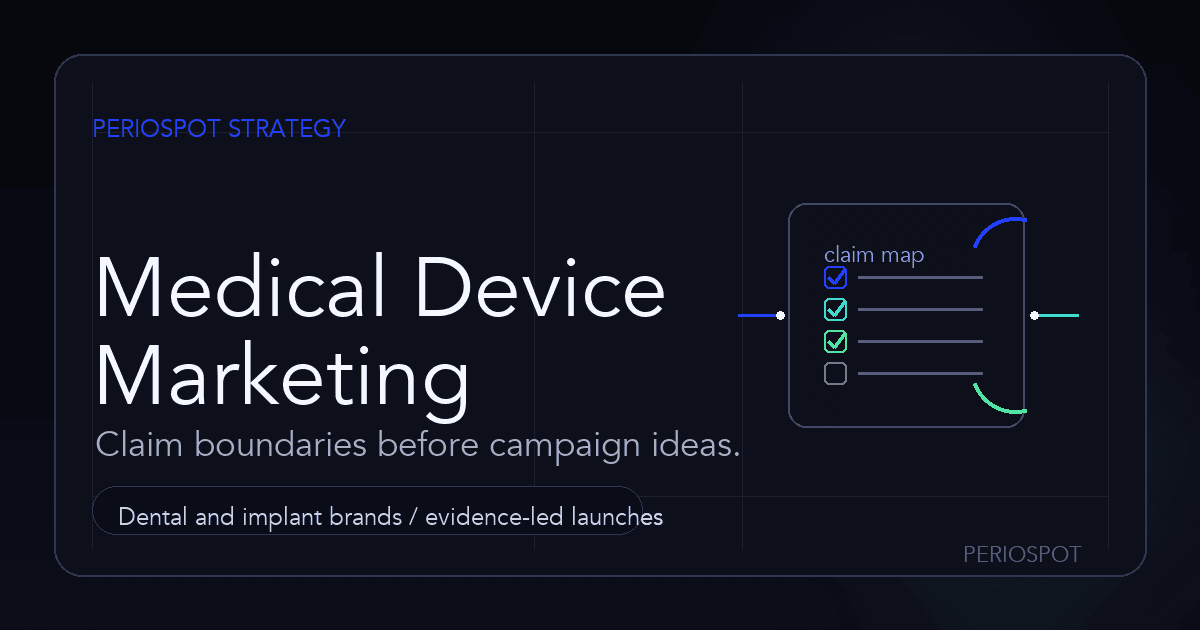
Table of Contents
Related clinical guides
The most important page in a dental device launch is often not the landing page, the booth graphic, or the video script. It is the boring one-page claim map that nobody wants to write.
That page asks the uncomfortable questions: what can we really say, what are we tempted to overstate, which cases are not a good fit, and where does the evidence stop?
Medical device marketing for dental and implant brands works best when the strategy starts there. Claim boundaries first. Campaign ideas second.
Many dental and implant brands still build marketing around the asset first: a launch video, a booth message, a carousel, a KOL lecture, a webinar, or a distributor deck. The problem is that those formats do not fix a weak clinical argument. They only make the weak argument more visible.
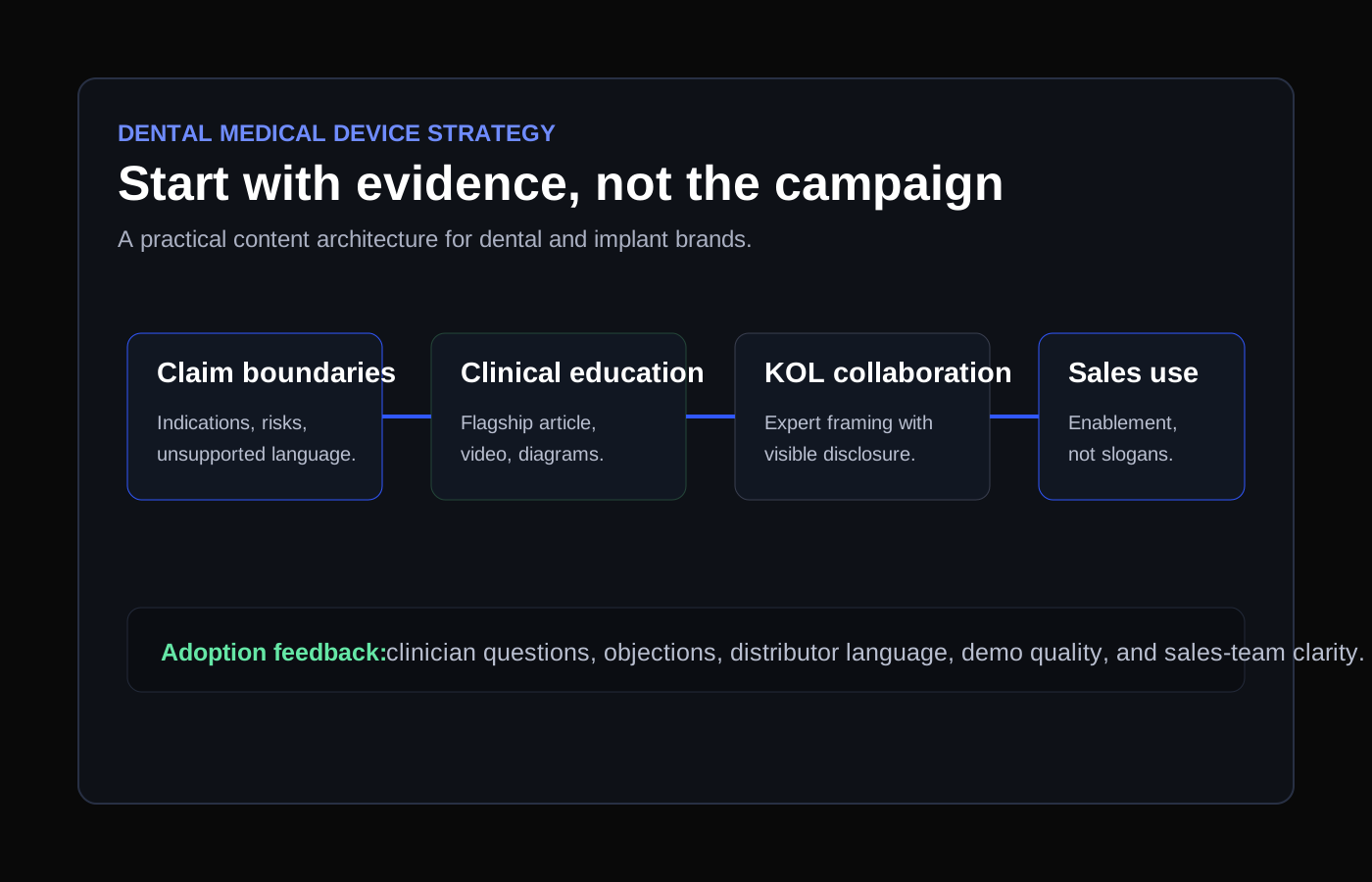
The better sequence is different: evidence first, claim boundaries second, content architecture third, distribution fourth.
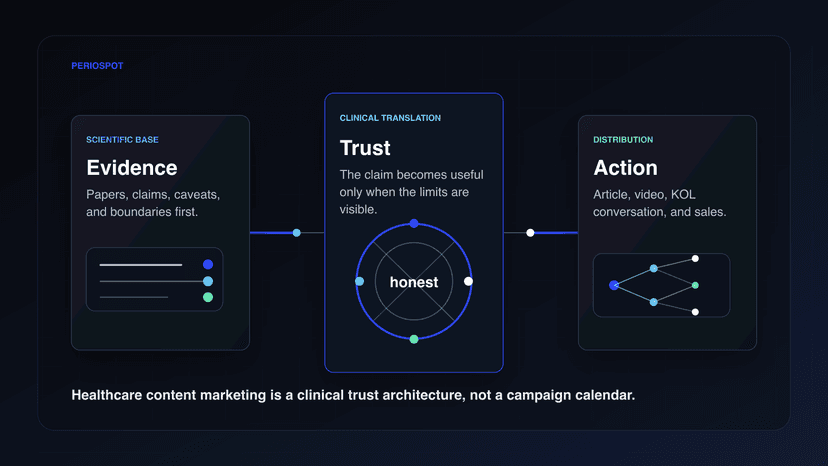
Short answer: a strong medical device marketing strategy for dental brands turns product evidence into clinical understanding. It does not simply generate awareness. It helps clinicians know when the product fits, when it does not, and why the claim is proportionate to the science.
Why dental medical device marketing is different
Generic medical device marketing advice often sounds reasonable: define the audience, clarify the value proposition, produce content, run campaigns, measure leads. That is useful, but it is not enough for dental and implant brands.
Dentistry is unusually visual, procedural, and trust-sensitive. A claim about a membrane, implant surface, chairside diagnostic workflow, guided surgery workflow, planning software, or regenerative material does not live only in a marketing funnel. It enters a clinical decision.
That means the reader is asking a different question.
- Is this clinically useful?
- Which cases does it apply to?
- What does the evidence actually support?
- What are the limitations?
- Is the person explaining this trying to educate me or sell to me?
The answer to that last question changes everything. A dental brand can sponsor education and still be trusted, but only if the commercial relationship is visible and the claims remain disciplined.
Start with claim boundaries, not campaign ideas
The first strategic document should not be a content calendar. It should be a claim-boundary map.
Before deciding whether the launch needs video, short-form clips, a webinar, or a newsletter placement, the team should answer five questions:
- What is the strongest claim we can support confidently?
- Which claim is tempting but too strong?
- Which indication, patient group, or case type is the best fit?
- Which limitation should be stated openly?
- Which words should legal, regulatory, and clinical reviewers avoid?
This is not only a compliance exercise. It is a trust exercise.
In the United States, the FDA's device-labeling guidance discusses how advertising can be treated as labeling depending on context. In Europe, MDR Article 7 prohibits misleading claims about intended purpose, safety, and performance. This article is not legal advice, and every device company needs its own regulatory review. But the communication principle is simple: do not build a campaign on language your evidence cannot carry.
Useful references for teams reviewing claim boundaries include the FDA device labeling overview and Regulation (EU) 2017/745.
The two audiences: clinicians and commercial decision-makers
Dental device marketing usually has two audiences at the same time.
The first is the clinician: periodontist, implant dentist, oral surgeon, prosthodontist, hygienist, educator, or KOL. This person wants to know whether the product helps solve a clinical problem and whether the explanation is credible.
The second is the commercial system: distributor, sales representative, product manager, education team, procurement group, or practice owner. This person needs a message that can be repeated clearly without drifting into exaggeration.
If the strategy only serves the clinician, the sales team may not know how to use it. If the strategy only serves the sales team, clinicians will feel the pressure immediately.
The practical solution is to build one central clinical argument and adapt it by depth:
- Deep: article, white paper, evidence review, webinar, lecture.
- Medium: video explanation, case discussion, comparison table, FAQ.
- Short: carousel, LinkedIn post, newsletter feature, clip, sales slide.
- Internal: objection handling, claim language, KOL briefing, distributor guide.
Dental KOL collaboration without hidden influence
KOL collaboration can be powerful in dentistry because clinicians learn from other clinicians. But it can also damage trust if the commercial relationship is vague or the content feels like a product monologue.
The best KOL work has three ingredients.
- Visible disclosure: the audience should know when the content is supported by a company.
- Clinical structure: the conversation should answer where the product fits, where it does not, and what still needs evidence.
- Editorial restraint: the expert should not be pushed into stronger claims than the data can support.
A strong KOL asset is not only a testimonial. It is a guided clinical explanation. It should make the viewer smarter, even if the viewer does not buy the product.
Dental video marketing is clinical translation
Dental video marketing is not valuable because video is trendy. It is valuable because dentistry is visual. Anatomy, workflow, surgical sequence, soft-tissue handling, radiographic interpretation, and digital planning are difficult to communicate with slogans.
But the video has to be structured.
For a dental or implant device, I would usually build a long-form video around this sequence:
- The clinical problem.
- The conventional approach.
- The gap or limitation.
- Where the device or technology fits.
- What the evidence supports.
- What the evidence does not yet prove.
- Case selection and practical cautions.
- Next step for clinicians who want to learn more.
That structure is less flashy than a launch film. It is also more useful.
Generic agency, internal team, or clinical communication partner?
There is no single best model. The right partner depends on the core problem.
| Team | Best for | Risk |
|---|---|---|
| Generic marketing agency | Websites, campaigns, paid media, design systems, lead capture | Content can look polished but clinically thin |
| Internal marketing team | Product knowledge, sales alignment, brand continuity | Can become too close to the product story |
| Clinical communication partner | Evidence framing, claim boundaries, KOL content, clinician trust | Requires comfort with caveats and editorial restraint |
The strongest setup is often a combination: the clinical communication partner defines the evidence, message architecture, and content standards; the internal team and agency execute distribution and campaign operations.
What to measure when adoption is clinical
Medical device marketing teams often over-measure lead volume and under-measure message quality. Leads matter, but in clinician-driven categories, the quality of the conversation matters too.
I would track five groups of signals:
- Qualified attention: watch time, saves, shares, webinar completion, repeat visits.
- Clinician engagement: comments, replies, case questions, skeptical but serious objections.
- Sales usefulness: whether representatives can explain the product more consistently.
- KOL clarity: whether experts use the same claim boundaries and caveats.
- Commercial movement: demo requests, distributor conversations, qualified leads, meeting quality.
Sometimes the best early signal is not a high number. It is a better question from the right clinician.
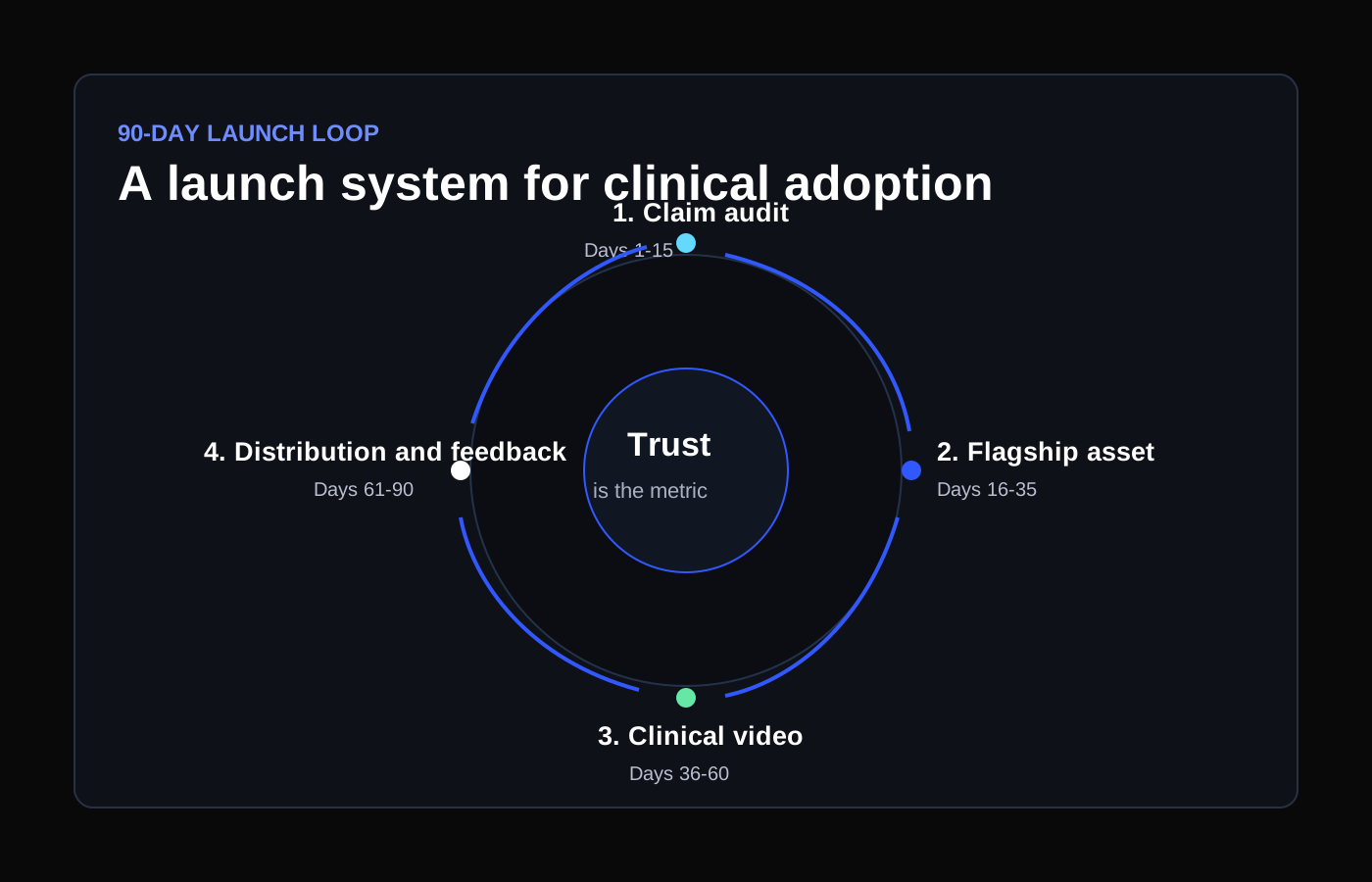
A 90-day medical device marketing plan for dental brands
If I were launching a dental or implant product, I would not start with 30 disconnected assets. I would start with one argument and make it travel.
Days 1-15: claim audit
- Collect regulatory-approved language, product data, clinical studies, case material, and internal sales claims.
- Separate strong claims from plausible but weaker claims.
- Create a list of forbidden or risky wording.
- Write the first version of the Honest Truth section: the evidence limits.
Days 16-35: flagship asset
- Build a central article or guide that explains the clinical problem and product category.
- Add diagrams, a claims table, and a limitations section.
- Create internal links to supporting clinical education.
- Define one clear call to action for qualified readers.
Days 36-60: clinical video
- Record an expert interview, technique deep-dive, or evidence review.
- Extract short clips that open a clinical question rather than shouting a benefit.
- Create one carousel or LinkedIn post that summarizes the decision pathway.
- Connect every short asset back to the flagship guide.
Days 61-90: distribution and learning
- Publish through newsletter, LinkedIn, YouTube, Instagram, distributor channels, and KOL networks.
- Track clinician objections and questions.
- Update sales language and FAQs from real feedback.
- Decide whether the topic deserves a webinar, comparison guide, or full Clinical Communication Playbook.
When to bring in a clinical communication partner
A dental brand should bring in a clinical communication partner when the product is scientifically real but the public message is not landing with clinicians.
That can happen for many reasons. The evidence may be scattered. The sales team may over-simplify the product. The website may sound like every competitor. The KOL may be excellent, but the surrounding content system may be weak.
This is exactly where Periospot can help.
Our Clinical Communication Services for Dental Brands are designed for companies that need evidence-based content, dental video, sponsored educational assets, Periospot channel placement, and a premium Clinical Communication Playbook built around the brand's evidence base.
You can also see an anonymized case study showing how product claims can be reframed into a more credible clinical communication system.
Periospot for dental brands
Need clinicians to understand your product without turning the message into hype?
Explore Periospot clinical communication partnerships: evidence-based content, dental video, sponsored educational assets, and custom communication playbooks.
Explore the communication playbookWhat this framework misses
The honest truth: claim discipline slows teams down at the beginning. It can feel less exciting than a campaign idea, and it often creates uncomfortable internal conversations.
It also does not replace regulatory review, clinical data, or a product that genuinely solves a problem. A communication system can make a good product easier to understand. It cannot make weak evidence stronger.
That limitation is exactly why the work matters. The goal is not to make every claim sound bigger. The goal is to make the true claim easier to trust.
FAQ
What is medical device marketing for dental brands?
Medical device marketing for dental brands is the strategy used to communicate a product, technology, or device to clinicians, distributors, and commercial decision-makers. In dentistry, it should connect evidence, claim boundaries, clinical education, KOL collaboration, and sales enablement.
How is dental medical device marketing different from dental practice marketing?
Dental practice marketing usually targets patients and local clinic growth. Dental medical device marketing targets professional audiences such as dentists, periodontists, oral surgeons, KOLs, labs, distributors, and product teams. The content needs stronger evidence framing and more careful claim language.
Should dental device companies use KOLs?
Yes, KOLs can be valuable when the relationship is disclosed and the content is clinically structured. The KOL should help explain where the product fits, where it does not fit, and what the evidence supports, not simply repeat a sales message.
What should a dental device launch create first?
The first asset should usually be a flagship clinical explanation: an article, guide, evidence review, or video that defines the product category, appropriate cases, claim boundaries, and limitations. Short-form content should point back to that deeper explanation.
Related Periospot reading
For the broader content strategy behind this article, read Healthcare Content Marketing for Dental Brands. For examples of clinical education built around practical decision-making, start with the bundle bone article, the alveolar ridge preservation guide, and the dental photography guide.
Comments
0 totalLoading comments...
Previous
Healthcare Content Marketing for Dental Brands: A 2026 Playbook
Next
Dental Video Marketing: How Brands Use Clinical Video to Drive KOL Adoption