Dental Video Marketing: How Brands Use Clinical Video to Drive KOL Adoption

Table of Contents
Related clinical guides
I have made enough dental videos to learn one uncomfortable lesson: a beautiful video can make a weak claim fail faster.
That sounds dramatic, but it is true. Dentistry is visual. Bone morphology, soft-tissue handling, digital planning, guided surgery, regenerative materials, chairside diagnostics, prosthetic workflows, and implant components are difficult to explain with a slogan. Video can make those ideas easier to understand.
But video also magnifies the problem. A weak claim looks weaker when it is on camera. A hidden sponsorship feels worse when it comes from a respected clinician. And a KOL video without structure can become a polished testimonial that dentists do not fully trust.
Short answer: dental video marketing should be built as a clinical trust system. Start with the clinician's question, define the evidence boundary, write a disciplined script, disclose the commercial relationship, and measure whether the video improves adoption conversations.
Why dental video marketing is different
Most video marketing advice is format-first: make a hook, keep it short, add captions, post consistently, repurpose the content. That advice is not wrong. It is just incomplete for dental and implant brands.
A dental brand is usually not selling a simple consumer preference. It is asking a clinician to believe something that may influence diagnosis, treatment planning, surgical workflow, material selection, patient communication, or purchase behavior inside a practice or distributor system.
That changes the job of the video.
- The video has to show the clinical problem clearly.
- The video has to explain where the product or technology fits.
- The video has to avoid claims that the evidence cannot support.
- The video has to make the sponsorship visible.
- The video has to help the sales or education team repeat the message without exaggerating it.
This is why dental video marketing belongs inside a broader clinical communication strategy, not as a disconnected production asset.
Start with the clinical question, not the camera
If I were advising a dental or implant brand, I would not begin with: "Should this be a Reel, a YouTube video, a webinar, or a KOL interview?"
I would begin with a more uncomfortable question: what does the clinician need to understand before this product makes sense?
For example:
- A regenerative membrane brand may need to explain case selection and handling, not only barrier function.
- An implant surface brand may need to explain what the evidence shows and what it does not prove.
- A diagnostic workflow company may need to explain clinical utility, timing, interpretation, and limitations.
- A planning software company may need to explain workflow reliability, data quality, and where clinician judgment remains essential.
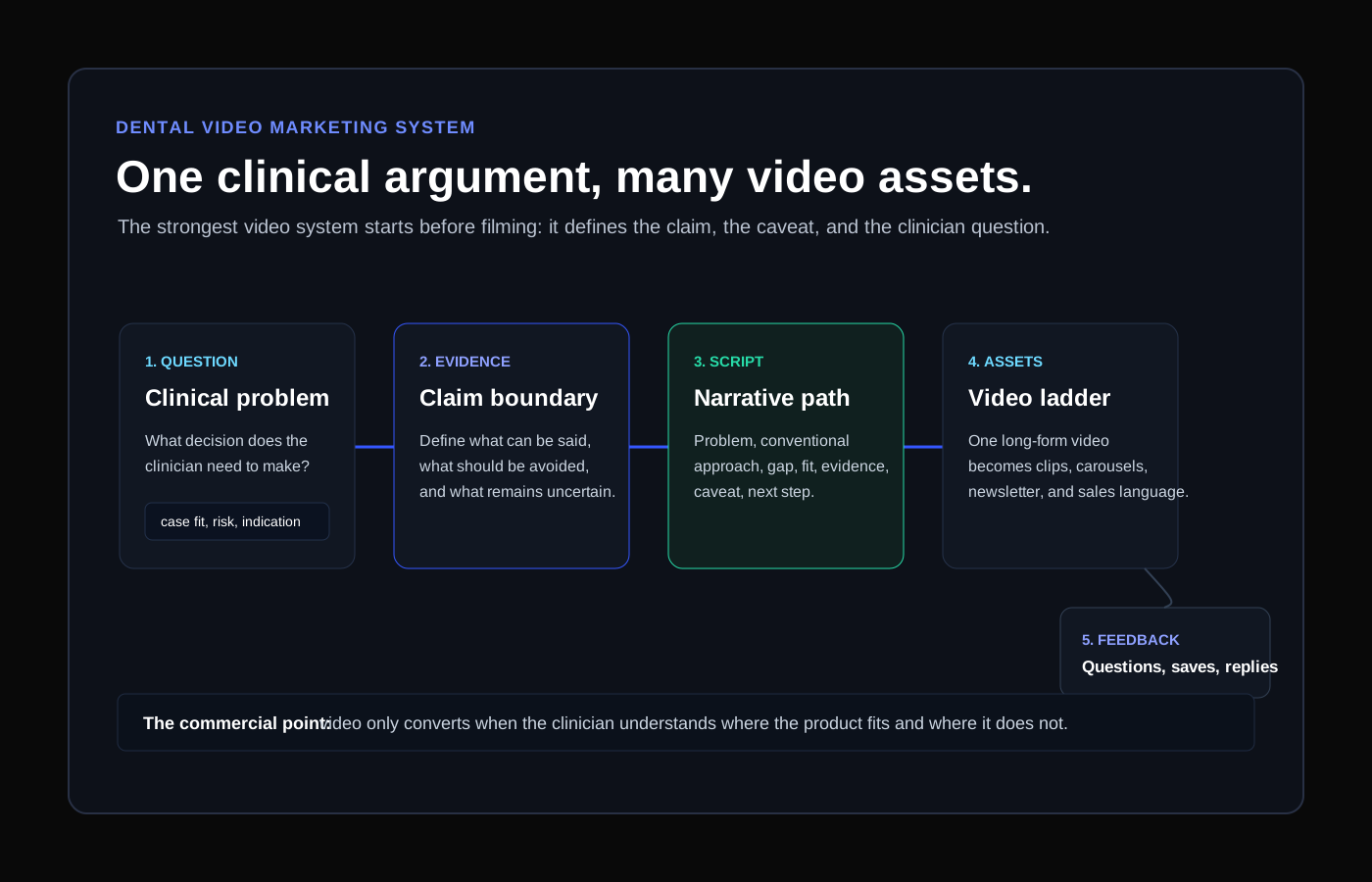
When the clinical question is clear, the format becomes easier. A long-form video can answer the full question. Short clips can open specific sub-questions. A carousel can summarize the decision pathway. A newsletter can drive qualified readers back to the deeper explanation.
The evidence boundary is the creative brief
For dental brands, the best creative brief is not a mood board. It is a claim-boundary document.
Before writing the script, the team should define:
- The strongest claim the evidence supports.
- The claim that marketing wants to say but should not say.
- The intended use, indication, or case type being discussed.
- The most important limitation to disclose.
- The words that legal, regulatory, and clinical reviewers should avoid.
This is not legal advice, and every company needs its own regulatory review. But the communication principle is practical: do not record a video that your evidence cannot defend.
For medical device companies, the FDA notes that device labeling can include informational literature and advertising in some contexts, and the EU MDR prohibits misleading claims about intended purpose, safety, and performance. For sponsored or endorsed content, FTC guidance also focuses on clear disclosure of material relationships. Those rules are not the same in every market, but they point in the same direction: make the relationship and the limits visible.
Useful official references include the FDA device labeling overview, Regulation (EU) 2017/745, and the FTC's Disclosures 101 for Social Media Influencers.
A practical dental video script architecture
The best dental brand videos are usually not random interviews. They follow a clinical sequence.
For a sponsored educational video, I would usually structure the script like this:
- The clinical problem: what decision or complication are we discussing?
- The conventional approach: how do clinicians usually handle it?
- The gap: where does the conventional approach become difficult?
- The product category: what type of solution is being discussed?
- The evidence: what supports this category or product?
- The caveat: where is the evidence limited or the indication narrow?
- The clinical use case: which cases are a better fit?
- The next step: article, webinar, dossier, literature, demo, or clinical consultation.
This structure works because it respects the clinician's skepticism. It does not ask the viewer to trust the product first. It asks the viewer to understand the problem first.
How KOL video should work
KOL video can be one of the strongest forms of dental marketing because clinicians learn from clinicians. But the same strength creates risk. If the audience believes the expert is giving a purely independent opinion and the relationship is hidden, the trust cost can be high.
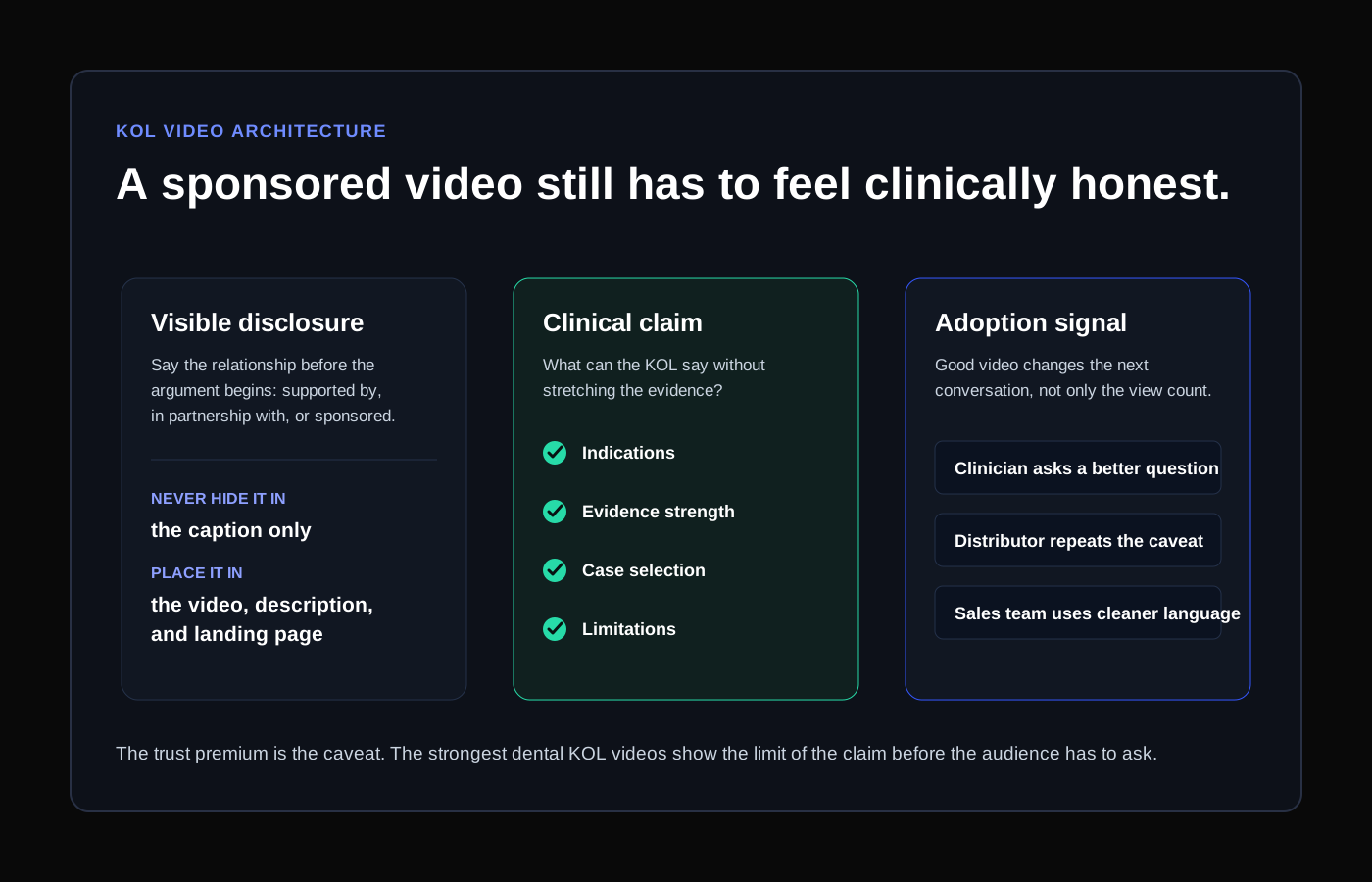
A good KOL video does three things openly:
- It discloses the relationship: supported by, in partnership with, sponsored by, or another clear formulation.
- It protects the expert: the KOL is not pushed to say more than the evidence supports.
- It serves the clinician: the video answers practical questions, not only product benefits.
The most useful KOL is not the one who sounds the most enthusiastic. It is the one who can explain why the product is relevant, where it should be used, and where the brand should be careful.
Long-form video is the flagship asset
Short-form video gets attention. Long-form video earns understanding.
That matters because most dental device and implant categories need more than a 45-second claim. If a clinician is evaluating a product, they often want context: case selection, workflow, complications, handling, evidence strength, learning curve, and whether other respected clinicians see the same clinical fit.
A strong long-form video can become the flagship asset for the entire campaign:
- A 10-15 minute YouTube explanation.
- A 45-60 minute webinar.
- An expert interview with time-stamped chapters.
- A product-category explainer that avoids becoming a direct sales pitch.
- A case discussion where the sponsored product appears as one part of the clinical reasoning.
Once the flagship asset is built, short-form content becomes more disciplined. Each clip has a job: open a question and point back to the deeper explanation.
Short-form clips should not be tiny advertisements
The mistake I see often is treating short-form dental video as miniature advertising.
That usually creates weak hooks:
- "This product changes everything."
- "The future of implant dentistry is here."
- "You need to try this new technology."
Those lines may create curiosity for a second, but they do not build serious clinical trust. Stronger hooks open a real decision:
- "When does this material actually change the treatment plan?"
- "The claim sounds attractive, but here is the evidence limit."
- "This workflow helps in these cases, but I would avoid it here."
- "Before using this diagnostic test, understand what it can and cannot tell you."
That is the difference between attention and authority.
What to measure in dental video marketing
View count is useful, but it is not enough. A dental brand can get many views from the wrong audience and almost no adoption movement.
I would separate metrics into three groups:
| Metric type | What to track | Why it matters |
|---|---|---|
| Attention | Views, retention, watch time, completion rate | Shows whether the topic and format hold interest |
| Clinical engagement | Saves, shares, comments, replies, case questions | Shows whether clinicians find the explanation useful |
| Adoption movement | Qualified demo requests, distributor conversations, sales language consistency, webinar attendance | Shows whether the video changed the commercial conversation |
For a technical dental product, one serious clinician reply may be more valuable than 10,000 passive views. The question is not only: did they watch? The question is: did the video make the next conversation better?
A 30-day dental video campaign plan
If a dental brand wanted to test video without building a full annual partnership, I would start with a 30-day system.
Week 1: claim and script
- Define the clinical question.
- Map evidence and limitations.
- Write the long-form script or interview outline.
- Pre-approve disclosure and claim language.
Week 2: flagship recording
- Record one long-form video or expert interview.
- Capture clean chapter segments for later clips.
- Record the disclosure visibly in the video.
- Mark the strongest 6-10 short-form moments.
Week 3: repurpose into a content ladder
- Create 3-5 short clips.
- Create one carousel or LinkedIn summary.
- Create one newsletter feature.
- Create one sales enablement summary with claim boundaries.
Week 4: publish and learn
- Publish the flagship asset and short clips.
- Track questions and objections.
- Update the FAQ and sales language.
- Decide whether the topic deserves a webinar, article, or full Clinical Communication Playbook.
Where Periospot fits
Periospot is not trying to be a generic video agency. The production quality matters, but it is not the main premium.
The premium is clinical judgment.
For dental brands, Periospot can help build the evidence map, define claim boundaries, structure the script, produce the video asset, distribute it through clinical channels, and report on the signals that matter: saves, shares, clinician replies, link clicks, qualified leads, and whether the message is being repeated clearly.
If the brand needs a broader system, the video can become part of a Clinical Communication Playbook: a custom operating manual for evidence, voice, visual direction, content pillars, citation standards, and 12-month distribution.
Periospot clinical video
Need dental video that feels clinically credible, not like a product monologue?
Explore Periospot clinical communication partnerships: sponsored educational video, KOL interviews, newsletter features, articles, and premium communication playbooks.
Explore clinical video partnershipsWhat this framework misses
The honest truth: video is not the strategy. It is only the most visible part of the strategy.
A brand can have a perfect script, a respected clinician, beautiful lighting, and strong editing, and still miss the point if the underlying clinical question is weak. The viewer may enjoy the production and still leave without understanding when the product belongs in the treatment plan.
This is why I do not like starting with the format. A Reel, a webinar, and a 12-minute YouTube video can all work. They can also all fail. The difference is whether the clinical argument is clear enough before the camera turns on.
FAQ
What is dental video marketing?
Dental video marketing is the use of clinical video to explain dental products, services, workflows, education, or technologies to dentists and other dental professionals. For dental brands, the strongest video marketing connects evidence, case selection, claim boundaries, and practical clinical use.
Why is video useful for dental brands?
Video is useful because dentistry is visual and procedural. It can show anatomy, workflow, handling, sequencing, decision points, and limitations more clearly than static copy. But it works best when it is structured around a clinical question, not only a product claim.
How should dental brands work with KOLs in video?
Dental brands should work with KOLs through visible disclosure, disciplined claim language, and a clinical script that answers where the product fits, where it does not, and what the evidence supports. A KOL video should educate first and promote second.
What should sponsored dental video disclose?
A sponsored dental video should make the commercial relationship easy to notice and understand. Disclosure should appear in the video itself and in supporting text such as the description, landing page, or newsletter feature. The exact wording should be reviewed for the relevant market.
What metrics matter for dental video marketing?
Useful metrics include watch time, retention, saves, shares, clinician replies, case questions, link clicks, qualified leads, webinar attendance, and whether the sales or education team can repeat the claim boundaries clearly.
Related Periospot reading
For the broader strategy, read Healthcare Content Marketing for Dental Brands. For the medical-device strategy behind claim boundaries, read Medical Device Marketing Strategy for Dental and Implant Brands. You can also see an anonymized clinical communication case study showing how product claims become a more credible communication system.
Comments
0 totalLoading comments...
Previous
Medical Device Marketing Strategy for Dental and Implant Brands: What Works in 2026
Next
Dental KOL Marketing: How Implant and Periodontal Brands Build Their Key Opinion Leader Bench
Related Articles
Dental KOL Marketing: How Implant and Periodontal Brands Build Their Key Opinion Leader Bench
11 min read
Healthcare Content Marketing for Dental Brands: A 2026 Playbook
11 min read