Anonymized case study
From product claims to clinical trust.
A dental brand does not win trust because the content looks polished. It wins trust when the argument survives clinical scrutiny.
The starting point
The science was stronger than the message.
This anonymized example reflects a common pattern in dental and implant companies: the product has a real clinical rationale, but the public communication sounds like a normal campaign. The message is polished, but it does not help a skeptical clinician understand where the product fits.
The work is not to make the brand louder. The work is to make the argument more useful. That means identifying the evidence base, naming the limits, and building content that a clinician could bring into a serious conversation.
The operating model
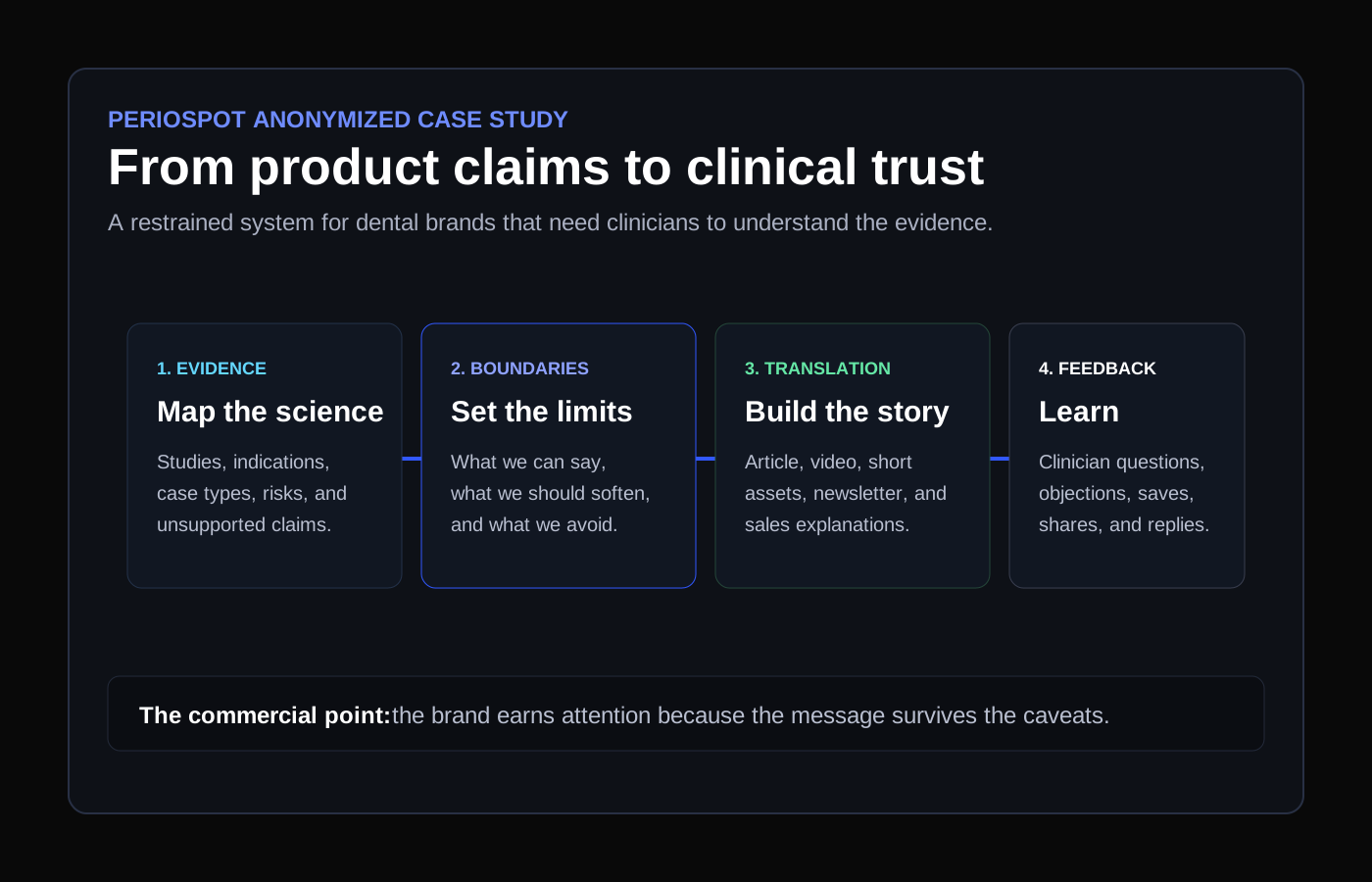
Four moves changed the quality of the communication.
Map the evidence
We separate product data, peer-reviewed literature, plausible clinical use cases, and language that is not supported strongly enough.
Set claim boundaries
The strongest message is not the loudest message. It is the one that says what the product can do, what it cannot do, and where the evidence is still incomplete.
Translate into assets
The same argument becomes a flagship article, video structure, newsletter feature, short-form clips, sales explanations, and KOL talking points.
Measure clinical movement
The useful signals are clinician questions, saves, shares, distributor language, qualified replies, and whether the sales team can explain the product more clearly.
Before
A product story
The message focused on features, broad benefits, and visibility. It was easy to understand, but too easy to dismiss.
Reframe
A clinical argument
The communication was rebuilt around indications, evidence strength, caveats, and the questions clinicians were already asking.
After
A reusable system
The brand had a structure for articles, video, short assets, KOL discussion, newsletter placement, and sales enablement.
What changed
The output was not more content. It was better clinical language.
For dental brands
Need the same system for your product category?
Periospot can build the evidence map, content architecture, and clinical communication playbook around your product, category, or launch.